Bio.
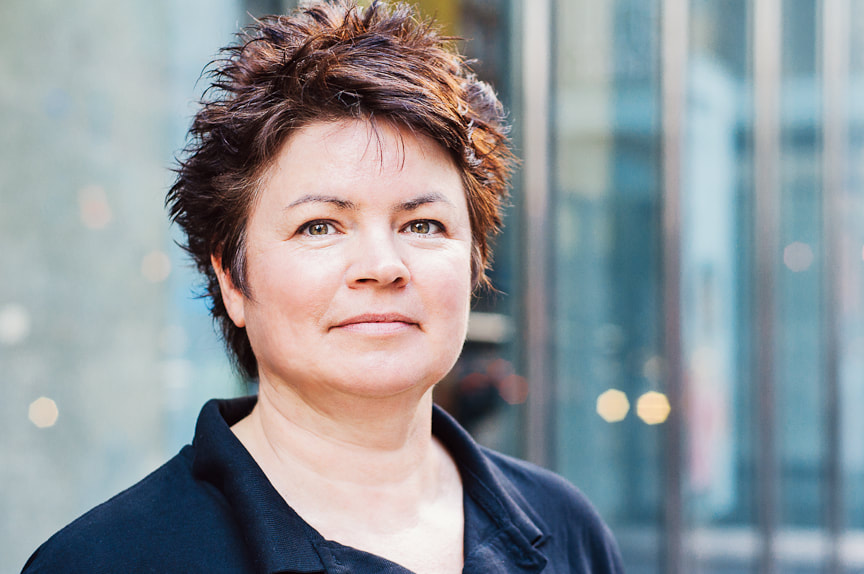
_Katherine Howell worked as a paramedic for fifteen years
while completing her Bachelor and Masters degrees in creative writing.
Her first novel, Frantic, was published in 2007 by Pan Macmillan and set
a paramedic alongside Sydney police detective Ella Marconi in 'an
adrenaline rush of a thriller' (Sydney Morning Herald). It won the 2008
Davitt award for best crime fiction. Her second book, The Darkest Hour,
continued the pattern with Ella and another paramedic in 'a finely
paced and engrossing novel' (Guardian UK). The third in the series, Cold Justice,
made the Australian bestseller list, saw Katherine travelling on a
P&O cruise as guest author, and was described by NYT bestselling
author Tess Gerritsen as 'one of my favourite books of the year'. It
also won the 2011 Davitt award for best crime fiction, making Katherine
the only author to have won twice. Her fourth book, Violent Exposure, was described by Bookseller & Publisher as 'arguably her best yet - four stars', while the fifth, Silent Fear,
was chosen as a ‘Guaranteed Book You Can’t Put Down’ by the national
Get Reading! programme. Katherine’s books are published in multiple
countries and languages and have been likened to the work of Karin
Slaughter and Patricia Cornwell. Katherine is studying female doctor
investigators in crime fiction for her PhD at the University of
Queensland, and teaches writing and editing. She lives in Queensland
with her partner, who owns a bookshop.
Katherine Howell was born and raised in Sydney. After leaving school she worked in various jobs, including as an animal handler and bookshop sales assistant, and went to university for a year to study science. Keen for something different she then joined the ambulance service, and spent the next fifteen years working on the road in various parts of NSW. She also studied for her BA and MPhil degrees, both in writing.
During that time she wrote four novel manuscripts. She says 'the first three are stashed in a cupboard, never to see the light of day again. But they each taught me a lot, and from those lessons I was able to write the fourth, which later developed into Frantic.' When Katherine first sent a draft of the book to her agent, however, it came back with the message that it didn't work because it had no suspense. 'I decided I would study the subject for my Masters then apply everything I learned to the rewriting of the novel.' It worked: when she sent it back to Selwa, it quickly sold as part of a two-book deal to Pan Macmillan then overseas as well. The book was published in Australia in 2007 and has since been released in eleven countries in six languages. Katherine now rereads her thesis each time she starts a new book to remind herself of the techniques of developing suspense in fiction. She also teaches workshops in the subject.
We asked her a few questions about writing.
Can writing be taught?
'I believe that writing is a combination of art and craft. Art is born in you; craft can be taught. Stubbornness, determination, and stubbornness are also necessary. When I wrote those terrible novels in the fifteen years before Frantic was accepted, I never knew whether I'd actually ever get published. I was determined however to keep working and learning my craft and improving my writing and maybe, one day, just maybe . . .'
What about courses?
'Well, you don’t need them, but I found my BA and MPhil degrees beneficial because they brought me into a community of people who valued writing and reading as much as I did, and gave me feedback and deadlines.
'There are plenty of short courses about now: the state and regional writers' centres have details about them, and about competitions and other opportunities too.
'It can be tough to know whether your own work is of publishable standard, and your assessment of it can depend on your mood. On a good day you might think it’s the best bunch of words ever put on paper. On a bad day, you start imagining what a lovely fire the pages will make. Doing a course can help you recognise what works and what doesn't and how to fix it.'
Katherine Howell was born and raised in Sydney. After leaving school she worked in various jobs, including as an animal handler and bookshop sales assistant, and went to university for a year to study science. Keen for something different she then joined the ambulance service, and spent the next fifteen years working on the road in various parts of NSW. She also studied for her BA and MPhil degrees, both in writing.
During that time she wrote four novel manuscripts. She says 'the first three are stashed in a cupboard, never to see the light of day again. But they each taught me a lot, and from those lessons I was able to write the fourth, which later developed into Frantic.' When Katherine first sent a draft of the book to her agent, however, it came back with the message that it didn't work because it had no suspense. 'I decided I would study the subject for my Masters then apply everything I learned to the rewriting of the novel.' It worked: when she sent it back to Selwa, it quickly sold as part of a two-book deal to Pan Macmillan then overseas as well. The book was published in Australia in 2007 and has since been released in eleven countries in six languages. Katherine now rereads her thesis each time she starts a new book to remind herself of the techniques of developing suspense in fiction. She also teaches workshops in the subject.
We asked her a few questions about writing.
Can writing be taught?
'I believe that writing is a combination of art and craft. Art is born in you; craft can be taught. Stubbornness, determination, and stubbornness are also necessary. When I wrote those terrible novels in the fifteen years before Frantic was accepted, I never knew whether I'd actually ever get published. I was determined however to keep working and learning my craft and improving my writing and maybe, one day, just maybe . . .'
What about courses?
'Well, you don’t need them, but I found my BA and MPhil degrees beneficial because they brought me into a community of people who valued writing and reading as much as I did, and gave me feedback and deadlines.
'There are plenty of short courses about now: the state and regional writers' centres have details about them, and about competitions and other opportunities too.
'It can be tough to know whether your own work is of publishable standard, and your assessment of it can depend on your mood. On a good day you might think it’s the best bunch of words ever put on paper. On a bad day, you start imagining what a lovely fire the pages will make. Doing a course can help you recognise what works and what doesn't and how to fix it.'
Can you share some advice/tips/general thoughts?
|
- If you’re aiming for eventual publication,
it’s helpful to get the opinions of others, but be wary of
asking your friends and family to read your work. Because
of their love for you, they will probably all say it’s
great.
- A writing group can
be a good place to share your work. It’s smart to find one
with the same goals as you, writing the same kind of work.
Your state writers' centre may be able to direct you to
such groups. The centres also have lists of manuscript assessment
services, which charge to read your complete manuscript or a
part thereof and give you a professional
assessment. Check the qualifications and experience of
assessors before handing over your money.
-
At the very least, read, read, and read some more. Find
good books in your genre and pull them apart. I analysed
crime novels, asking what made me want to keep reading? How
did the author do that? How did she draw all the plot
threads together? How did she keep the identity of the bad
guy hidden while also laying all the clues out before me?
By studying how other books work, you can learn a great deal about
techniques and devices to use in your own.
- It’s vitally
important to get the first draft down. I have a piece of
paper stuck to my wall that says ‘You can’t improve what
isn’t there’. Once the draft exists, you can go back over
it, see what works and what doesn’t, look for ways to
change and improve things. Until then, however, you have only a
blank page and some ideas.
- Writing
is not easy. There are days when you think your brain will rupture.
A lot of people think they fancy writing but really what attracts
them is the idea of having written. If you are going to be a writer
you need to love the feeling of working stories out, putting words
down, and going back over and over your work, searching for ways to
improve it. On my worst days writing, when I think of all the things
I could do brilliantly well if I invested that time I was spending
banging my head against the desk, I still know that it will be more
than balanced out by the best days when the words just flow, and
plot ideas come faster than I can write them down, and links between
characters and events and causes in the story pop up everywhere.
- This is why stubbornness is so necessary. You have to be able to keep working. After all, you never know what you might achieve if you keep at it.
- For more advice there are some great blogs out there: I like J A Konrath's site, and while Miss Snark no longer blogs, her archives contain an enormous amount of good and very funny advice. My friend Ian Irvine has written a great article called 'The Truth about Publishing', and another friend Louise Cusack also has some solid advice on her site, and is a highly respected mentor to boot.
- In the book department I like Stephen King's On Writing, and I also keep going back to Anne Lamott's Bird by Bird. Another good one is Janet Burroway's Writing Fiction, which is less about inspiration and more about the nuts and bolts of writing.